PeC Monthly Newletter
We're here to help you
Bridge the Gap between Academics & Real World Product Development of Consumer Goods For Early Career
STEM Engineers Who Lack Polymer Breadth...
Unlock the secrets to thriving in a competitive, high-tech industry.
The Polymer eClub Newsletter is designed exclusively for early-career STEM engineers seeking to bridge the gap between academic theory and real-world product development.
With each edition, gain invaluable insights into the nuances of polymer materials, processing, design, and testing—knowledge that can elevate your career to the next level. Imagine having access to exclusive content that demystifies the industry, positioning you as a sought-after expert.
Subscribe today to transform your career potential and join a community dedicated to innovation and expertise.
HERE's What You need to Know In order to increase your value in the workforce:
Materials
Processing
Design

Testing
WATCH EPISODEs HERE:
EPISODE #1:
Materials
EPISODE #2:
Processing
EPISODE #3:
Design
EPISODE #4:
Testing
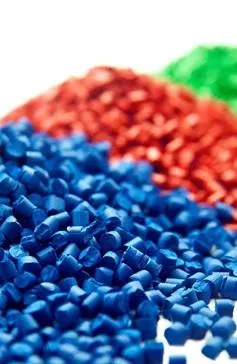
Materials
By Materials, we mean moldable polymeric materials used by industry to make consumer goods. With Materials we know Plastics and Thermoset Plastics are rigid polymers that compete, and Elastomers and Thermoplastic Elastomers (TPEs) are flexible polymers that compete. Therefore, we cover the similarities and differences of Plastics, Elastomers, TPEs, and Thermoset Plastics using the monomers Styrene, Ethylene, Propylene, Ester, Amide, and Urethane, since they create significant volumes of moldable polymers.
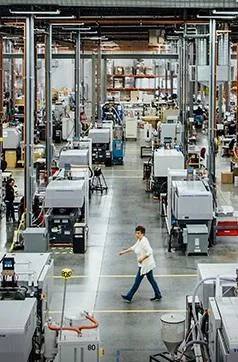
Processing
By Processing, we mean the processes used to make parts. For Thermoplastics, we coverInjection Molding, Extrusion, Blow Molding (3 kinds), Thermoforming, Rotational Molding, andAdditive Manufacturing. Equipment, process steps, part examples, and insights into the bigadvantages and weaknesses of each process. For Thermosets, Compression Molding, TransferMolding, Injection Molding, and Liquid Injection Molding, again covering equipment, process
steps, part examples, and process advantages and disadvantages.
Design
By Design, we mean those aspects of the part design that are unique to the process. Each one of these processes works well with certain designs and that’s what we will illuminate, like how to optimize a part design for injection molding, the part design details, the tooling design details, even how to learn the most from simulation of the process, where I cut my teeth in my early career.
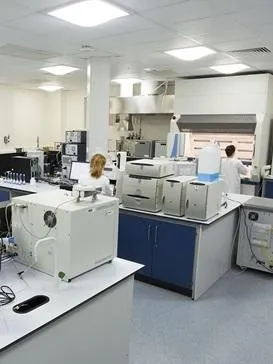
Testing
By Testing, we mean the useful laboratory characterization tests which are rigid polymer centric like Modulus, Impact Testing and more, and the flexible polymer centric tests like Hardness, Compression Set Resistance and more. We also cover various analytical techniques including FTIR which identifies polymer based on chemical structure. TGA, in which a temperature sweep quantifies polymer composition and DSC, in which a temperature sweep identifies polymer transitions like Tg, crystallization, and melting.